About
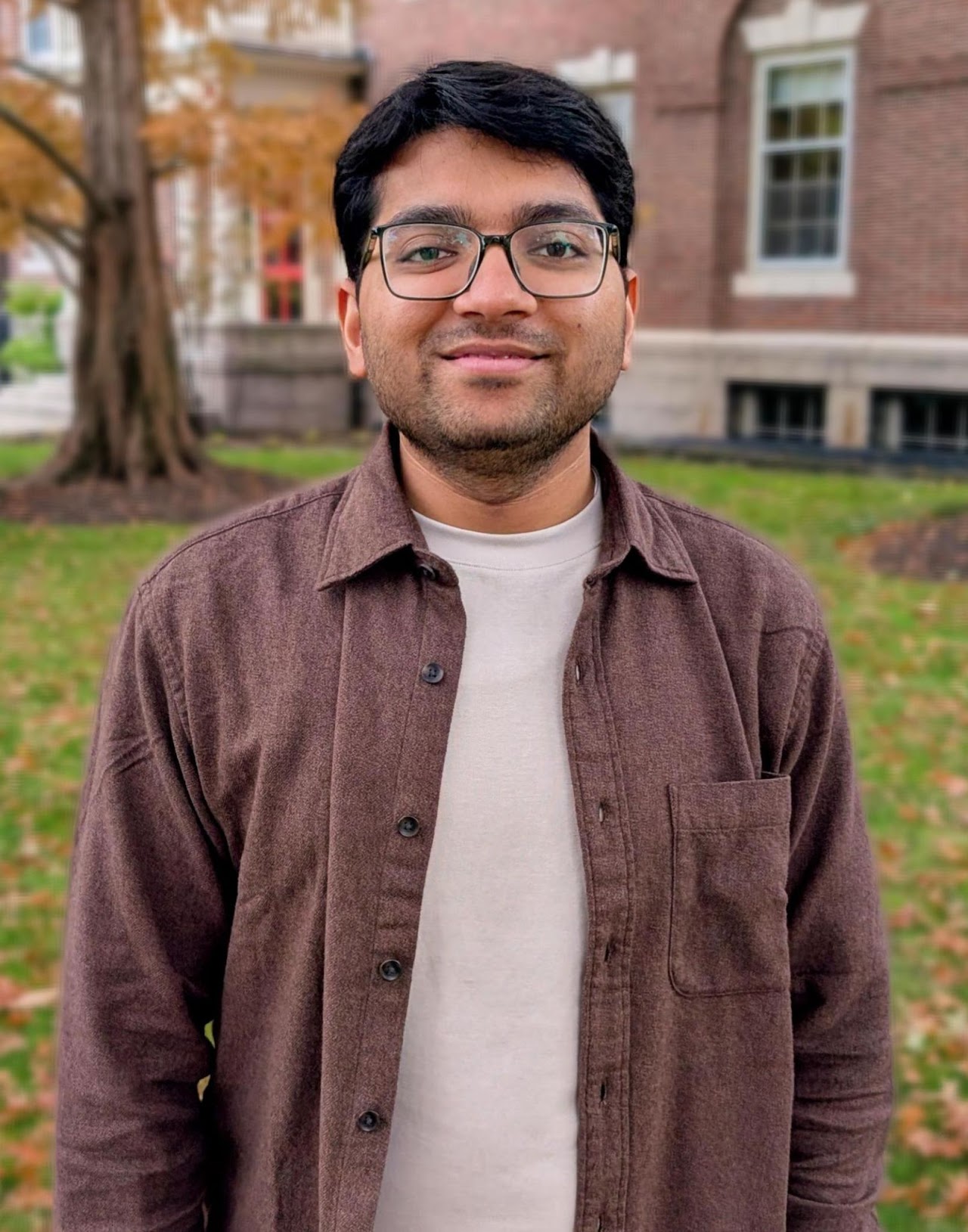
I am a PhD candidate in Public Policy (Economics track) at Harvard University.
My research is in development economics with a focus on human capital and socioeconomic mobility.
I am a graduate student affiliate at the Center for Population and Development Studies, the Institute for Quantitative Social Science, the Lakshmi Mittal and Family South Asia Institute, and the Center for International Development (CID) at Harvard. Before my graduate studies, I worked as a research assistant at CID, Boston University, and NBER.
You can reach me at nikhil_kumar1@g.harvard.edu
Working Papers
Developing Socioemotional Skills in Early Adolescence: Experimental Evidence from Morocco’s Public Schools
Draft (English) · Draft (French) · Conditionally accepted via pre-results review at Journal of Development Economics.
Abstract
We investigate a government-delivered socioemotional support intervention in Morocco’s public lower-secondary schools. The intervention trained existing school social specialists to deliver small-group workshops to students in grades 7 and 8. In a cluster-randomized trial across 200 schools, all in the first year of a broader reform, 84 were assigned to the intervention and 116 to control. Assignment increased workshop participation by 43.2 percentage points and students’ knowledge of their social specialist by 16.9 percentage points. Over one school year, however, this increase in exposure did not translate into detectable average effects on the pre-specified primary outcomes (interpersonal and intrapersonal skills) or on overall learning, dropout, creativity, well-being, or study habits. If anything, students’ self-control declined by 0.097 standard deviations. Yet, we observe improvements in two sets of secondary outcomes: grade repetition fell by 1.7 percentage points, and student achievement increased in select subjects and subdomains: physics, chemistry, and biology, written expression in Arabic and French, and oral expression in Arabic. All of these results hold under a pre-specified hierarchy of hypothesis tests that controls the false discovery rate. Thus, although existing school staff can expand students’ exposure to support without additional staff or pay, a low-intensity universal protocol did not measurably improve the targeted socioemotional skills; instead, positive effects fell on academic and progression outcomes.
Tax Education in Equilibrium: Evidence from a Taxpayer Education Program in Ghana
Abstract
A property tax experiment in Ghana randomly provides tax education to property owners and officials. The intervention raises tax knowledge and generates spillovers to untreated households through conversations with more knowledgeable neighbors but has no ultimate impact on tax payments. Educated taxpayers and officials become more engaged in their interactions, but do not shift toward collaborative relationships. Taxpayers revise downward their beliefs about enforcement capacity and become more aware of legal ways to reduce their tax burden. These results highlight that tax knowledge spreads through social networks, and that its effects on tax outcomes are mediated by its ability to shape citizen-state interactions.
Beyond Basics: Whole School Reform and Early Adolescent Development
Abstract
This study investigates whether a government-led, whole-school reform in public lower secondary schools can simultaneously reduce dropout and improve both academic and socioemotional outcomes. We employ a prospective difference-in-differences design, using machine learning on nationwide administrative data to match 200 reform schools in Morocco to 100 comparable schools. The analysis uses primary assessment data for 20,036 students and administrative enrollment records for 637,587 observations. After one year, the reform reduced end-of-year dropout by 1.6 percentage points, a 31.4 percent decline, increased learning by 0.52 standard deviations, a 3.3-fold acceleration, and improved a pre-specified index of socioemotional skills by 0.22 standard deviations. These findings demonstrate that government-led interventions can deliver multidimensional benefits during the critical lower secondary school years and highlight the potential of whole-school reform to support adolescent development.
Selected Works in Progress
The Role of Informal Intermediaries in Urban Job Search and Rural-Urban Migration
Fieldwork in progress.
Multinational Firm Boundaries, Host Country Firms and Labor Markets
Data analysis in progress.
Learning with Peers: Experimental Evidence from a Scaled-up Peer Tutoring Intervention in Rural India
Draft available upon request · Pre-registration
Abstract
We study a light-touch peer tutoring intervention at scale, facilitated by teachers and embedded within rural public primary schools in the poorest Indian state of Bihar in partnership with the district education administration and an NGO. Teachers in treatment schools were encouraged to form and maintain groups of size 5-6 with a high-performing student as the tutor and conduct peer tutoring sessions at least thrice a week in one period of the regular school day. We find that the program increased math performance by 0.15-0.16 standard deviations for both learners and tutors driven by gains in learning across a range of math competencies. Learners in treatment schools report finding studies easier and feeling less anxious when studying with friends. We do not find effects for tutors or learners on a range of socioemotional skills. We also find a tightening of student peer groups such that both tutors and learners are reported by a smaller number of peers as part of study groups, while learners also report studying with fewer peers. These results demonstrate that same-grade peer tutoring can be implemented by teachers at scale within public primary school classrooms effectively.
AI and Crime
Supported by Harvard University Center for International Development GEM Incubation Fund 2025: Catalyzing AI for Inclusive Change.
Teaching
The Economics of Infrastructure in Developing Countries (Syllabus)
Instructor, Sophomore Tutorial, Fall 2024 · Fall 2025 · Spring 2026
Econometric Methods II
Teaching Fellow for Michael Gechter, PhD First Year Core, Spring 2025
Advanced Quantitative Methods: Causal Inference
Teaching Fellow for Michael Gechter, MPA/ID First Year Core, Spring 2025
Data Sources
Some interesting sources of public data, mainly focused on India, can be found here.